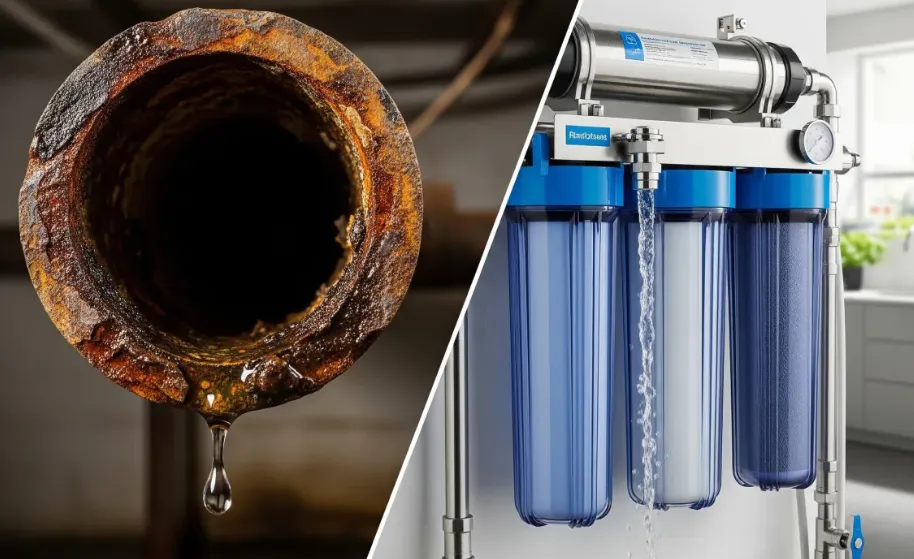
Lead Pipes or Builder-Grade Plastics? Why Every Columbia Home Needs Filtration
Lead Pipes or Builder-Grade Plastics? Why Every Columbia Home Needs Filtration
It doesn't matter if you live in a historic home in Shandon or a brand-new subdivision in Northeast Columbia—your water is compromised. The historic neighborhoods are battling a 100-year-old crumbling infrastructure, while the new builds are being outfitted with cheap, builder-grade appliances that are immediately degraded by Columbia’s aggressive chemical water treatment.
Do not assume your water is safe just because your house is new, and do not ignore the hidden dangers of historic plumbing. Protect your family and your property equity today. Click here to use our Water Filter Calculator to determine exactly what kind of whole-house filtration your specific property age and zip code requires.
For a list of certified local installers who understand the difference between retrofitting a 1920s bungalow and outfitting a 2024 new build, head over to our Water Filtration Directory Money Page.
DOWNLOAD CITY OF COLUMBIA WATER REPORT
The Infrastructure Illusion
New construction homeowners often think pristine pipes mean pristine water. They are wrong. The water flowing into that new home still traveled through miles of decaying city mains, picking up sediment, DBPs, and industrial runoff along the way. By the time it hits your brand-new tankless water heater, the damage is already underway.
The Local Data Context: Columbia's Infrastructure Battle
Columbia’s water infrastructure is a tale of two eras, both presenting unique hazards to the end-user. The city's water system dates back to the early 1800s, with the Columbia Broad River Canal Water Treatment Plant going into operation in 1906.
The Historic Home Dilemma (Downtown, Shandon, Elmwood):
Homes built before 1986 carry a high risk of lead solder in their plumbing, and the municipal grid connecting to these homes relies on miles of aging cast-iron and older pipes. During the historic 100-year flood in October 2015, the Columbia Canal breached, causing massive infrastructure trauma and a system-wide boil-water advisory. The city is still upgrading and repairing these aging systems. To prevent lead from leaching from old pipes into the water, Columbia Water adds orthophosphate. However, this aging grid is still a superhighway for sediment, rust, and the staggering levels of DBPs (like HAA5 at 279x EWG guidelines) required to keep the old lines sanitized.
The New Build Dilemma (Lexington, Northeast Columbia, Blythewood):
New developments boast PEX piping and modern plumbing, meaning lead is not the primary indoor concern. However, these homes are entirely reliant on the same heavily treated surface water from Lake Murray and the Broad River. The massive amounts of chlorine and byproducts—specifically Bromodichloromethane (153x guidelines) and Trichloroacetic acid (79x guidelines)—wreak havoc on the rubber seals and internal components of modern, high-efficiency appliances. Furthermore, the newly laid municipal pipes in sprawling subdivisions often suffer from low flow and stagnation in the mains, which can lead to localized spikes in chlorine dosing to maintain sanitary conditions.
Whether your home is 100 years old or 100 days old, the baseline municipal water provided to it contains industrial chemicals, forever chemicals (PFOS/PFOA), and cancer-linked byproducts. A centralized whole-house filtration system is the only way to sever your home's reliance on Columbia's aging grid.
